Revolver.
The mere word elicits either scorn or curiosity about quaint firearms technology.
Well, we've decided to shoot REVO! And we're danged proud to pick up a fading tradition. REVO shooters are becoming few and far between. They account for only a few percentage points of IDPA 23,000+ membership in 50 countries.
Frankly, we don't give a damn, My Dear! Shooting a revolver is SO MUCH FUN! And that's where we are right now. We're in it for the fun. We couldn't care less how we rank in the final scores.
If we had to pick only ONE pistol to own it would be a revolver. That's how much we love them.
As of late September 2015, we own two Ruger GP100 revolvers. One is an older blued 4-inch and the other is 2014 production GP100 3-inch.
Lots of good things have been done to both revolvers. Both have their "personalities" but both are in great shape for IDPA competition.
We are excited about our new course of fire.
Saturday, September 26, 2015

Tuesday, September 1, 2015
Documentation
Document Your Self-Defense Training
By: |

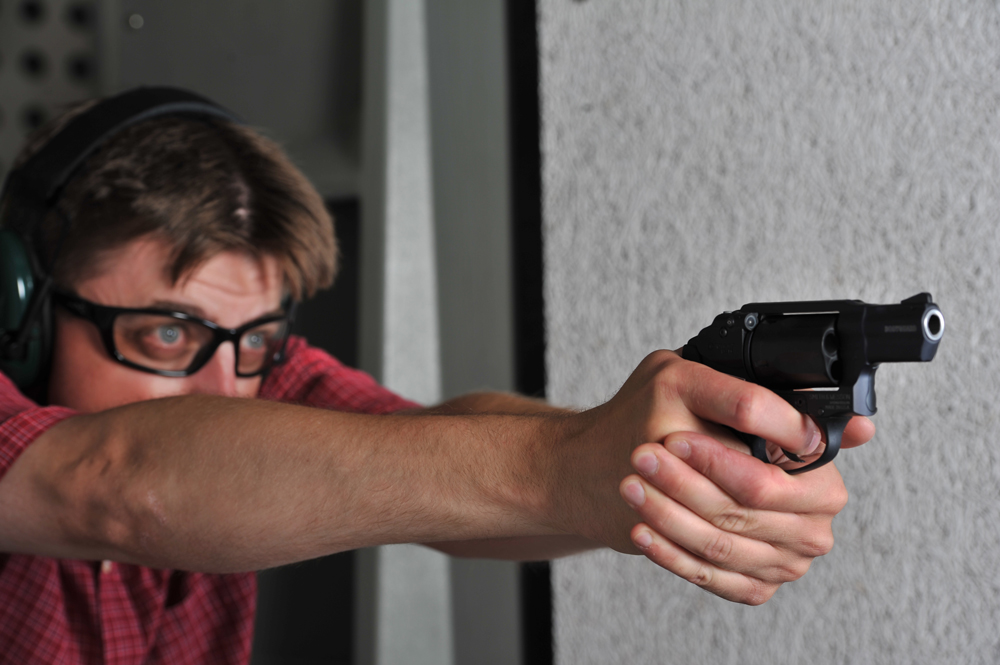
Following a defensive gun use, your ability to prove what training you’ve had could make the difference should you find yourself in the crosshairs of the law.
If you ever wind up in front of a judge or jury in the unenviable position of having to justify an act of self-defense, you will need to prove that your actions were reasonable under the circumstances. Informing the triers of fact about the training you’ve had is the key.
Under the rules of evidence, you have the right to introduce evidence that will help court officials understand your mindset leading to your decision to shoot in self-defense. This evidence may include an instructor explaining what he or she trained you to do under those circumstances.
You can explain the nature and extent of your training and knowledge to the judge or jury, but only if you can document that you possessed that knowledge before the self-defense incident occurred.
For example, let’s say that you shot an individual who was threatening to cut your throat while that person was five steps away from you. If you’d had the right training, you knew before this ever happened that a person five steps away possesses both the ability and the opportunity to use that knife against you. The jury should understand your prior knowledge, so they can decide if a reasonable person would have pulled the trigger when you did, knowing that someone threatening with a knife is a deadly danger to you, even five steps away.
Your ability to introduce properly documented training will greatly aid the court in understanding that your actions were indeed reasonable—and hence justifiable.

Also check out, Deadly Force: Understanding Your Right to Self Defense. This guide, by Massad Ayoob, will help you understand the legal and ethical issues concerning the use of lethal force by armed citizens.
You need to document classes you’ve attended, books you’ve read and DVD lectures you’ve viewed so there is no question of what you knew ahead of time. This documentation can be done in several ways. At theArmed Citizens’ Legal Defense Network, Inc. we provide members with eight lectures on DVD. On the DVD labels, we print lines for members to initial and date each time they view one of the lectures. You can and should do the same with educational and training DVDs.
Each time you watch an educational DVD, document the viewing with an indelible marker on the disk label and take notes on the material taught. Once you’ve developed a good set of notes, mail the notes to yourself by U.S. Mail, return receipt requested. When the notes come back to you, file the unopened, postmarked envelope in a safe deposit box.
If you ever get a judge who doesn’t believe you knew what the lectures taught, introducing a signed, sealed and delivered copy of notes made while watching the lectures on DVD should do the trick. The same strategy will work for professionally taught classes and books.
Another tactic is to give your notes to an attorney other than your defense attorney and have them filed with your records at the law firm’s office. There may be a small fee for this, but it is worth it. Again, do not secure the notes with your defense attorney, but with someone else so the lawyer holding your notes can testify as an officer of the court that you gave them the documents, something the attorney defending you cannot do. Next, you testify about how you took these notes. Let’s say that perhaps you watched the video three times as your notes would show.
Another way to document material learned by lectures on DVD would be to view training DVDs in a group setting, for example at your gun club. Make a list of all who were present and also saw the video, and then you could call one or more of these people as eye witnesses to having viewed the video.
Get good training, read books by knowledgeable authors and use DVD lectures to increase your understanding of self-defense issues, but do not fool yourself into thinking that is enough. Take good notes and preserve the integrity of those notes with the understanding that they may be the factor that ultimately proves the reasonableness of your self-defense actions.
Thursday, August 27, 2015
Public Lands Shooting Shift?
We wonder if The National Forest Service "might" be phasing in a policy and management shift regarding where recreational sport shooting activities can take place on USFS-administered public lands.
Four Ranger Districts on Colorado's Arapahoe and Roosevelt National Forests (ARNF) recently released draft plans to manage where recreational sport shooting (RSS) activities may take place.
It has long been speculated by RSS enthusiasts that Federal Land Managers would someday begin to address uncontrolled RSS activities in areas where urban development interfaces with the "wide open spaces" of public lands.
Although there is no stated connection between the ARNF's proposals and a broader policy shift by Regional Forest managers, one would reasonably assume that other National Forest officials are closely watching how the ARNF approach to RSS issues plays out.
Clearly, uncontrolled RSS activities can be appropriate and dangerous in close proximity to dense urban development and heavily used travel corridors.
We have not yet had time to study the ARNF proposals in detail. However, one aspect of the proposal literally leaps off the page to catch our attention. In the attached map, you can see that the ARNF has designated only two sites as "Designated Shooting Area."
(NOTE: Here is the link to a full size version of the map graphic shown here:
http://a123.g.akamai.net/7/123/11558/abc123/forestservic.download.akamai.com/11558/www/nepa/101606_FSPLT3_2554011.pdf
Narrative continues below map graphic.
 We have long been of the opinion that RSS activities will eventually become highly restricted, if not actually regulated, on public lands. The transgressions of a few who trash public lands and who shoot in reckless and unsafe places and ways have perhaps forever tarnished the good behavior of the vast majority of RSS enthusiasts.
We have also long harbored hopes that the Forest Service would be pro-active and work with the RSS community to develop many accessible, safe Designated Shooting Areas, if not actual controlled shooting ranges.
As we move into an uncertain RSS future, we feel it would behoove both RSS enthusiasts and public lands managers to reach out to each other and engage in a productive, ongoing dialog regarding how to efficiently address what is certain to be a growing set of issues on public lands across America.
Four Ranger Districts on Colorado's Arapahoe and Roosevelt National Forests (ARNF) recently released draft plans to manage where recreational sport shooting (RSS) activities may take place.
Here is the official website of the ARNF proposal:
It has long been speculated by RSS enthusiasts that Federal Land Managers would someday begin to address uncontrolled RSS activities in areas where urban development interfaces with the "wide open spaces" of public lands.
Although there is no stated connection between the ARNF's proposals and a broader policy shift by Regional Forest managers, one would reasonably assume that other National Forest officials are closely watching how the ARNF approach to RSS issues plays out.
Clearly, uncontrolled RSS activities can be appropriate and dangerous in close proximity to dense urban development and heavily used travel corridors.
We have not yet had time to study the ARNF proposals in detail. However, one aspect of the proposal literally leaps off the page to catch our attention. In the attached map, you can see that the ARNF has designated only two sites as "Designated Shooting Area."
(NOTE: Here is the link to a full size version of the map graphic shown here:
http://a123.g.akamai.net/7/123/11558/abc123/forestservic.download.akamai.com/11558/www/nepa/101606_FSPLT3_2554011.pdf
Narrative continues below map graphic.

We have also long harbored hopes that the Forest Service would be pro-active and work with the RSS community to develop many accessible, safe Designated Shooting Areas, if not actual controlled shooting ranges.
As we move into an uncertain RSS future, we feel it would behoove both RSS enthusiasts and public lands managers to reach out to each other and engage in a productive, ongoing dialog regarding how to efficiently address what is certain to be a growing set of issues on public lands across America.
Saturday, February 7, 2015
Friday, December 26, 2014
Christmas Classifier
Well, it's really NOT a Classifier on Christmas...but it's close. It's only two days later than Christmas...barely enough time for Santa to get his reindeer unharnessed and bedded down.
It's 6 pm on The Day After Christmas and I am pondering tomorrow's Classifier. I think I have shot in maybe 6 or 8 of them so far. Can't remember. My IDPA number is #48372 and you can look it up as easily as I can.
Shooting The Classifier is a Big Deal in IDPA. We are now required to shoot The Classifier every 12 months to be eligible to participate in a Sanctioned Match. I love Sanctioned Matches and will shoot in every one that I can so, obviously, I need to be re-classified every year.
I will shoot the best I can possibly shoot in The Classifier, regardless of the consequences. Even though it behooves me to stay in the Marksman Classification, I will ALWAYS and FOREVER try to reach high and scrape and scratch my way to Sharpshooter.
I know that reaching the lofty requirements of Sharpshooter are out of my reach but that won't stop me from trying to get there. This is really one of the most fun things about IDPA...it's one of the things that motivates all of us IDPA shooters. We WANT to advance to the next level and we practice, shoot and hope to get there.
Even though it may never happen in our lifetime on this Earth, it is something that we all fantasize about. Oh, how we would all love to be at least one level higher in our respective Divisions.
I did very well in my CDP Division/Marksman Classification this year. But was it enough? Nope. That's the way IDPA works. There's always a Brass Ring slightly outside of your reach in the Match Merry-Go-Round. That's one very fundamental reason why IDPA is so successful.
This week, I shot over 200 rounds in practicing the most basic of shots for the IDPA Classifier. I try to hark to the idea that it's an FTDR to actually "practice" The Classifier. But, on the other hand, many of the shots in The Classifier are fundamental to all IDPA Stages. So, that's what I try to do, stay true to basics and ignore how my practice fits or doesn't fit with The Classifier.
I will be shooting The Classifier on December 27th at the Phoenix Rod & Gun Club (PRG) IDPA at the base of South Mountain. This club dates back to the 1930's. The PRG IDPA stages The Classified once a month through rain or shine every year. They are experts at staging the classifier. NO one does it better than they do...at least in my own experience.
I have printed out all The Classifier "shooting tips" and have made index cards for how to load my magazines for each of the three stages. No matter how many times you have shot The Classifier, you always need to refresh your brain on how this important Match is conducted.
It's a Big Deal. Tonight I feel a little like a college student preparing for a final exam once again. One of The Beauties of IDPA is that, somehow, someway, this truly international pistol shooting club could re-create that unique feeling once again.
I Love IDPA and I hope you do, too.
It's 6 pm on The Day After Christmas and I am pondering tomorrow's Classifier. I think I have shot in maybe 6 or 8 of them so far. Can't remember. My IDPA number is #48372 and you can look it up as easily as I can.
Shooting The Classifier is a Big Deal in IDPA. We are now required to shoot The Classifier every 12 months to be eligible to participate in a Sanctioned Match. I love Sanctioned Matches and will shoot in every one that I can so, obviously, I need to be re-classified every year.
I will shoot the best I can possibly shoot in The Classifier, regardless of the consequences. Even though it behooves me to stay in the Marksman Classification, I will ALWAYS and FOREVER try to reach high and scrape and scratch my way to Sharpshooter.
I know that reaching the lofty requirements of Sharpshooter are out of my reach but that won't stop me from trying to get there. This is really one of the most fun things about IDPA...it's one of the things that motivates all of us IDPA shooters. We WANT to advance to the next level and we practice, shoot and hope to get there.
Even though it may never happen in our lifetime on this Earth, it is something that we all fantasize about. Oh, how we would all love to be at least one level higher in our respective Divisions.
I did very well in my CDP Division/Marksman Classification this year. But was it enough? Nope. That's the way IDPA works. There's always a Brass Ring slightly outside of your reach in the Match Merry-Go-Round. That's one very fundamental reason why IDPA is so successful.
This week, I shot over 200 rounds in practicing the most basic of shots for the IDPA Classifier. I try to hark to the idea that it's an FTDR to actually "practice" The Classifier. But, on the other hand, many of the shots in The Classifier are fundamental to all IDPA Stages. So, that's what I try to do, stay true to basics and ignore how my practice fits or doesn't fit with The Classifier.
I will be shooting The Classifier on December 27th at the Phoenix Rod & Gun Club (PRG) IDPA at the base of South Mountain. This club dates back to the 1930's. The PRG IDPA stages The Classified once a month through rain or shine every year. They are experts at staging the classifier. NO one does it better than they do...at least in my own experience.
I have printed out all The Classifier "shooting tips" and have made index cards for how to load my magazines for each of the three stages. No matter how many times you have shot The Classifier, you always need to refresh your brain on how this important Match is conducted.
It's a Big Deal. Tonight I feel a little like a college student preparing for a final exam once again. One of The Beauties of IDPA is that, somehow, someway, this truly international pistol shooting club could re-create that unique feeling once again.
I Love IDPA and I hope you do, too.
Monday, December 8, 2014
Thinkin' 'bout 9mm
I've been spending a LOT of time in the past few months thinking about 9mm. I actually bought a Ruger SR9C on Labor Day in Idaho Falls. It's now my carry pistol. I haven't shot it much but I like it. Meanwhile, I am thinking about switching from .45ACP to 9mm for a variety of reasons too complex and complicated to discuss here.
Consequently, I've been doing a lot of online R&R (research & reading) about various 9mm pistols that would be good for the IDPA Stock Service Pistol (SSP) category.
All of this has brought me to the relatively new CZ P09. Here is one of the most amazing pistol reviews I have ever read. And, yes, it's about the CZ P09. Check it out:
http://shootersmagazine.com/sheriff-baghdad-cz-p-09/

 The CZ P-09 pistol just feels right in my hand. CZ’s pistol takes “human factor” attributes to a whole new level. The three main features going right for the P-09 that relates to ergonomics:


 I did not use discretion on specific type of ammo I shot with intentionally. I shoot everything ranging from tall ammo, cheap steel-case ammo to very expensive ammo for my 9mm’s. I throw it all in one can and pay no attention to it. To date, I have not had any malfunctions caused by changing from one ammo type to another. The P-09 performance is unmatched compared to any other pistol I own with the same cheap ammo.
Consequently, I've been doing a lot of online R&R (research & reading) about various 9mm pistols that would be good for the IDPA Stock Service Pistol (SSP) category.
All of this has brought me to the relatively new CZ P09. Here is one of the most amazing pistol reviews I have ever read. And, yes, it's about the CZ P09. Check it out:
http://shootersmagazine.com/sheriff-baghdad-cz-p-09/
HANDS ON: JOHN MCPHEE REVIEWS THE NEW CZ POLYMER HANDGUN

John ‘Shrek’ McPhee, the Sheriff of Baghdad
John is a retired Army Sergeant Major, Counter-Terrorist Special Mission Assault and Reconnaissance Operator, and Combat Veteran. He has 21 years of US Army Special Operations experience and more than 8 years of private security consulting and firearms instruction. Eleven years of his military career were spent conducting thousands counter-insurgency operations where acute tactical accuracy, precision and surgical marksmanship was critical to mission success. John’s expertise and intimate knowledge of firearms and operational applications is based on real world lessons learned and experiences. He has tested weapons of all types for the Defense Industry Contractors and authored reviews for firearm developers to improve the quality of their products. He provides firearms training, close quarter tactics, and security consulting services for Department of Defense, law enforcement agencies, private security companies, and the everyday citizen.
THE CZ P-09
The first polymer frame pistol was Heckler & Koch VP70 9mm pistol. Polymer frame pistols have been in existence since the 1950’s; yet, these types of pistols did not gain popularity until the mid-1990’s. For over two decades, I have employed pistols in combat operations as a US Army Special Operations assaulter, sniper, and as a firearms instructor in my current shooting courses. My knowledge of pistols comes from more than 20 years of real world application and lessons learned. It is based on events in my occupation where mission success and my life depended on acute accuracy and failure was not an option. My passion for firearms drives me to understand the function, mechanics, ergonomics, and accuracy of every firearm I have used and owned. I have found that no one type or specific manufacture’s pistol is a “one size fits all” or a “turnkey” solution. The pistol you own should be based on your own requirements or “must have’s” that make you feel confident and comfortable for your intended use; whether it is for personal protection or as a service pistol. Historically, my “must have’s” have always been costly modifications to my pistol until I came across the CZ P-09. A few months ago, I had the opportunity to buy the new full-sized polymer frame pistol from CZ, the P-09. I was amazed with the CZ P-09’s deliverables.
 CZ P-09 FEATURES

- 19+1 (15+1) round capacity
- Polymer frame with light rail
- Convertible controls, ambi safety or decocker
- New Omega trigger system
- Accurate cold hammer forged barrel
- Firing pin block
ACCURACY.
To start, CZ has been known for its accuracy in all of its pistols. Personally, I tend to think that this accuracy comes from CZ’s quality barrel and the way the barrel locks up. I believe that the barrel in this P-09 is the same barrel as an SP-O1. In addition, it is most likely to be the same barrel that is in the legendary CZ 75. Although it might not be interchangeable from pistol to pistol, it is the same barrel manufactured on similar hammer forging machines. For practical accuracy (this is not arms room, this is not reading out of the manual, this is my practical use on the range), I have seen my 100-yard shots with a CZ pistol increase resulting in 5 out of 5 or 10 out of 10 successful shots; where, I might only hit 3 or 4 out of 5 with my other pistols. I trust that this phenomenon has to do with the beaten zone (grouping) of the pistol. For example, if a similar caliber pistol other than the CZ shoots a 12-inch group at 100 yards and a CZ shoots a 6-inch group at 100 yards, then the 6-inch group has a higher percentage of accuracy and more chance of hitting the target. I saw the same performance at 200 yards when I shot 5 out of 5 again. I believe that CZ P-09 is probably the most accurate polymer-framed production pistol produced today.
ERGONOMICS
 The CZ P-09 pistol just feels right in my hand. CZ’s pistol takes “human factor” attributes to a whole new level. The three main features going right for the P-09 that relates to ergonomics:
1. CZ uses a steel magazine allowing for more ergonomic flexibility of the P-09. This steel magazine is smaller than the traditional plastic magazines. It is more durable and supports a smaller grip. The plastic magazine has to be thicker and wider to show similar strength as its steel counterpart. Therefore, any pistol with a plastic magazine equates to a bigger grip. This happens to be the major complaint with any polymer magazine for pistols. Since CZ uses a metal magazine, the grip happens to be a bit smaller appealing to those with a smaller grip need
2. The trigger guard is oversized for gloves. This feature on a pistol makes it free and easy to just pull the trigger because there is more room in the trigger guard, whether you use gloves or not.
2. The trigger guard is oversized for gloves. This feature on a pistol makes it free and easy to just pull the trigger because there is more room in the trigger guard, whether you use gloves or not.
3. The last one is the actual checkering of the plastic. Every pistol has some type of grip with checkering or lines; basically something to help you grip the pistol. Otherwise, the pistol would be smooth and hard to hold. Normally, as soon as I get a pistol, I burn it with a soldering iron to add grippiness to the plastic. It’s my additional reassurance the pistol does not slip out of my hands. The design of the grip on the P-09 allows for me to maintain positive control of the pistol and mitigates my concern of losing my grip. The nicety for me is I don’t have to burn the grip at all to get the same desired end state I normally want for grip.
CONTROLS

CZ P-09 9mm
Unlike the most common polymer frame pistols, CZ P-09 comes with oversized controls. The first time I saw them, quite honestly, I did not know what to think. I will attest that your fingers know best. In my first ten minutes with this pistol, I did not miss hitting the slide lock on a reload. P-09 Slide Lock is big, it’s got good width, and it is easy to use. Normally, controls are very small and very hard to manipulate with a thumb or an index finger. To add to my frustration with small controls, I am a lefty, so when I hit a slide-lock, it happens with my left trigger finger and that is not easy to do with any little slide lock. The P-09’s oversized controls take left handed shooters like myself into consideration and it’s much appreciated.
CZ P-09 comes standard with two controls. Each pistol is equipped with ambi decocker and ambi safety. The ambi safety levers are included in the box and are easily interchangeable with the decocker by the end user. The decocker is spring-loaded. As you pull the decocking level downward, it decocks the hammer to what they call half-cock or 10%, which means that the pistol is safe. Since the decocker is spring-loaded, when pulled down to decock the pistol, it springs back to where it was originally and thus ready to decock the pistol again if needed. This is the best kind of decocker. This type of decocker is better for you if you place the pistol in your pants, purse, or a bag. With the hammer forward, there is almost no chance that the pistol will go off in a concealed compartment.
The second control is the ambi safety. The safety control allows you to keep the pistol in single action mode. The hammer goes to the rear when you charge the pistol, placing a round in the chamber, requiring you to manually place it on safe. This feature keeps the pistol always in single-action mode and requires you to manually place the pistol on safe. The safety control is great for a police officer or someone that carries a pistol in the line of duty. Best used if carried in an exposed holster (hip mounted, on belt), locked and cocked.
Action & Trigger
CZ P-09 is a both double-action and single-action pistol. This means that it shoots in both double-action mode and in single-action mode. In double-action mode, it is you who keeps pulling the trigger all the way back until the pistol goes off. Once the pistol goes off, the slide comes to the rear, then goes forward to load another round, which pushes the hammer backwards. The second shot as well as the subsequent shots will be single action shots. I believe this it best double-action trigger I have ever used.
I am very familiar with double action pistols with these style triggers from my time with the U.S. Army. However, I believe the poundages of trigger pull on duty pistols are much greater on other double-action pistol than the CZ P-09 duty pistol. In my practical application of the P-09 ( again this is not arms room, this is not reading out of the manual, this is my experience on the range), I have found that CZ P-09 in double action has a pretty clean 10-pound trigger. Additionally, in single-action mode, it has a nice 3-pound trigger. This is the cleanest double/single-action trigger I have shot in a long time.
Sights
The sights on the P-09 are low-profile combat-style sights. Typically, when I get a pistol, the first thing I do is replace the stock sights with low-profile combat-style sights, similar to the stock sights on CZ’s P-09. The P-09 comes with 3-dot tritium sights. I’m a huge fan of tritium sights simply because they glow in the dark. They are great during low light shooting or black out operations. Personally, 3 dots get a little confusing for me, so I take a black paint marker to color over the 2-dot rear sight. This way I only have 1 dot at night. Here is the reason I prefer a 1-dot sight versus 3-dot sights: any dots or lines or different colors; I may not see those in a stressful situation and I may not be able to act upon those. However, if the only dot is in the center of the target, that bullet will more than likely go to center of the target. Again, it adds up to personal preference, mine is a 1-dot front sight.
In addition to the tritium sights, I also like a thin front sight and a wide-notch rear sight. This just makes shooting a little quicker for me. This lends itself towards increased speed and proficiency at speed drills. I have found no issues with my speed because of the stock sights on the CZ P-09. An interesting observation during my practical application of the CZ P-09 on the range, I expected some speed adjustments because of sights, my draw time, my reloads; everything was the same as it was with my other pistols. Generally, it takes me two weeks to a month to master a new pistol, with the CZ P-09, it was as if I had used, trained, and owned the weapon for years.
In addition to the tritium sights, I also like a thin front sight and a wide-notch rear sight. This just makes shooting a little quicker for me. This lends itself towards increased speed and proficiency at speed drills. I have found no issues with my speed because of the stock sights on the CZ P-09. An interesting observation during my practical application of the CZ P-09 on the range, I expected some speed adjustments because of sights, my draw time, my reloads; everything was the same as it was with my other pistols. Generally, it takes me two weeks to a month to master a new pistol, with the CZ P-09, it was as if I had used, trained, and owned the weapon for years.
MAGAZINE
The P-09 magazine is a 19 round magazine. In total, this pistol holds 19+1 rounds (1 in the chamber and 19 in the magazine). In combat, everybody says you should count your rounds. Yes, you should. Here is the deal: in the worst situation of your life, the last thing I would want to do is count my rounds and have to figure out how many rounds I shot in order for me to decide to reload or not. If it only takes me a second or so to reload, or if the number of rounds in my pistol is ever in question, then I am instantly swapping a magazine when its safe and convenient for me. Bottom line, more bullets in the gun are better for me.
MAINTENANCE
Let’s talk about user-level maintenance. The P-09 breakdown of the pistol is very easy. Taking the pistol apart is simple to do as it comes with its own tool, the magazine. It begins by unloading the pistol and removing the magazine. As you are holding the pistol, there is a line on the left-hand side of the slide that needs to line up with a line on the back of the frame. You then line up those two lines with your right hand, hold them lined up, take the corner of the magazine and push the slide lock. After that, you just pull it the rest of the way out. What a genius design! This lends itself for ease of duty for the combat-style shooter that may not have a tool and that might have to get the pistol taken apart quick, fast, and in a hurry. Taking the slide off, in general, is super easy. Use the corner of the magazine, line up the lines on the slide of it and bam. The slide comes off.
ACCESSORIES
The P-09 is a brand new pistol and when I started calling holster companies, no one really had a good holster for the P-09. I had to adapt and improvise. I decided to embark to my origins of shooting and what I knew through training in army special operations. I resorted to my go-to paddle holster, the Safariland 568. This is a multi-fit holster made of leather. This has been the staple holster for commandos in my line of work for at least 20 years. I really do not know the origins of the 568 but I took the 568 Safariland holster, loosened the screws just a bit, adjusted it to fit my P-09, and I was in business. Safariland is working on duty-style holsters for the P-09, as we speak. I am using my Safariland mufti-fit holster, no issues whatsoever. By far, 568 is one of the best holsters ever produced. I would recommend it to anybody who wears a paddle holster.
The next thing I use with my P-09 is the Safariland’s 71-2-55 single mag pouch belt. This is a universal belt magazine pouch. The reason I use universal magazine pouches is its great utility and firearm diversity. Whether I’m shooting a Glock, a Sig, a Beretta, or a 1911, these magazine pouches fit every pistol and every situation I find myself in. Safariland is now manufacturing belt clip magazine pouches in addition to their belt loop model pouches. In the past, I would MacGyver the 744 belt clip onto a 71-2-55 single mag pouch belt. So the new model is an added bonus and convenience for me. You can laugh if you want, again it’s about personal preference. I prefer to use a multi-fit magazine pouch because I shoot several different pistols with several types of magazines, and it is just by far the most versatile pouch created. It’s well worth its weight in gold.
COST
CZ does not believe that you should spend extra money after purchasing their pistol. Their belief is once you buy a CZ pistol, it should be a turnkey solution with little to no aftermarket modification required. Personally, I happen to be a frugal guy. I also have a lot of pistols with lots of different accessories and modifications. Considering today’s economic challenges, investing in a weapon becomes more of a bucket list or personal wish list item than a practical purchase. CZ’s pistols offer more than just accuracy, they give the biggest bang for the buck, making this capability attractive to gun owners.
Overall
The CZ P-09 proved to be very easy-shooting pistol. It’s solid all the way from accuracy of the barrel to its performance in austere situations that would normally malfunction most polymer pistols. It has a good, clean trigger. The accuracy is through the roof. I cannot give enough credit to the accuracy on this pistol. Right out of the box, I put a loaded magazine in it. I shot three rounds at 100 and hit, and I shot three rounds at 200 and hit. With my first six rounds out of the pistol; no oil, no maintenance, no nothing—no issues. I continued to load magazines and shoot. The P-09, so far, has been awesome in my first 1000 rounds. I have no complaints and my P-09 pistol has never seen a drop of oil by me. I probably won’t oil the pistol until about 8,000 rounds or until it needs it. I have yet to experience a malfunction. So, I will let you know in 8,000-10,000 round article on the CZ P-09, how this actually pans out.
 I did not use discretion on specific type of ammo I shot with intentionally. I shoot everything ranging from tall ammo, cheap steel-case ammo to very expensive ammo for my 9mm’s. I throw it all in one can and pay no attention to it. To date, I have not had any malfunctions caused by changing from one ammo type to another. The P-09 performance is unmatched compared to any other pistol I own with the same cheap ammo.
One nice feature of the P-09 I would highly recommend, especially to a new shooter, is using the decocker on the pistol instead of the safety. Here’s why: with the decocker, all you have to do is just that, after the shot, decock the pistol. With a safety, you have to take the pistol off safe to shoot and then back on safe afterwards. Personally, I’ve been rocking the decocker. I have also really enjoyed the safety on the P-09. It is easy to change and I do it myself. There is nothing hard about these pistols. It is made in a way that the user can choose a decocker and/or a safety themselves.
The P-09 is the best bang for the buck. These pistols retail for around $500. I didn’t have to spend additional money on this pistol to put it to use. I have not done any modifications and I probably won’t do any modification on this pistol. This is due to the fact that it’s got sights that I like; it’s got a trigger that’s good, and the CZ strategy of, “We want to make a good pistol that you don’t have to spend money on.” I think it is genius.
Lastly but not least, I give folks at CZ-USA an outstanding for customer service. Zero drama and hassle free should always be the embodiment of customer service and support. No one wants to deal with cumbersome and difficult customer service or hear Baloney Sandwiches from corporate representatives after they already took your money. I wish more companies in this industry did business like folks at CZ-USA. They are nice, easy to deal with, polite and are always on time. I could not have had a better experience dealing with the folks at CZ-USA.
John McPhee
Monday, December 1, 2014

Friday, August 15, 2014
The Airweight
I graduated from Purdue University in January 1970 with a dual degree in Journalism and History. I tried to make a "go" of self-publishing but failed. Consequently, I took a real job in March 1972 as Managing Editor for "The Zionsville Times" in Zionsville, Indiana.
The owner of the newspaper was a pompous jerk who had nothing but contempt for his advertisers and subscribers. Right from the "git go" the local folks urged me to start up a newspaper to compete with "The Zionsville Times." Considering that The Times was founded in 1860, that seemed an impossible dream.
Finally, however, my wife and I started "The Zionsville Main Street" newspaper on August 8, 1972. It sold for "one red cent" and was printed on Tuesday, Thursday and Saturday on both sides of a single 11 by 17 sheet of paper. I made my reputation for that newspaper by covering every single call out of the local volunteer fire department and also by getting the Friday night football game results into the next morning's newspaper.
Within one year, we captured 90% of the advertisers and subscribers from The Times. The owner absconded town in the middle of the night. The former owner then sold us The Times for pennies on the dollar. At that point, we were well positioned for long term success.
Even though we could have backed off our intensive coverage of fires and traffic accidents, we decided to become even more dedicated to such coverage and eventually won a state press association award for our photo coverage of various tragedies.
One night I went out to the scene of a very sad fatality. The drunk driver of the early 70's muscle car had been go going too fast, the car went airborne completely across a wide creek. While in mid-air, the car turned upside down and sideways and t-boned into a large hardwood tree on the other side of the creek. The impact killed the passenger instantly. However, the drunk driver, as is often the case, survived although he was badly injured.
I took a lot of photos of the grisly scene, including the empty beer cans strewn everywhere and duly reported the facts of the situation.
Meanwhile, time passed. One morning, I was sitting in my office shuffling papers and answering phone calls when I heard a really loud noise and a gasp from our elderly receptionist, Viola. An enraged young male burst into my office shouting obscenities at the top of his lungs.
His eyes were bloodshot. His face was scarred with fresh stitches and his right arm was in a sling. He rushed to my desk and began shouting that he was going to kill me. It was the driver of the car in the incident described above.
The man went on and on about how he would have killed me right then and there if he had use of his right arm or had a gun. He said he was going to kill me just as soon as he could and shouted obscenities about my coverage of the fatal wreck in which he had been the drunk driver.
Finally, he stormed back out of the office with as much noise and bluster as he could muster. My Staff and I were in shock. Some of the women were crying while others simply sat at their desks and stared with a blank look on their faces.
I leaped from my desk and practically ran to the nearby Town Marshall's Office to report the threatening incident. The Marshall was an Old Man on the tail end of a long law enforcement career. He listened patiently and calmly reached into his desk and pulled out what looked like a Doctor's prescription pad.
While he was still listening to me, he scribbled something on the pad. Then he looked me straight in the eyes with his old, steel gray stare and said, "John, I have no doubt that man will kill you unless you protect yourself. I can't protect you. Only you can protect yourself. Here is a permit to carry a concealed pistol. Go to the Barber Shop, tell Bill The Barber to take you to the gun shop in Lebanon, Indiana, right now. Buy whatever pistol Bill tells you to buy. Learn how to use it before you come back to Zionsville. Carry it where ever you go and sleep with it at night. Good Luck."
And that was it. He had said his piece. Well, I took the paper and shook his hand and then practically ran to the small town's only barber shop. Bill Cripe was the barber. Bill was almost always asleep in one of his barber chairs, all stretched out and snoring like a freight train. If you wanted a hair cut, you had to shake Bill and wake him up. After he shook off his nap, he'd be ready to cut your hair.
Bill kept an old hog leg 45 Long Colt revolver just out of sight but always at easy reach. He was fond of pulling out that 10-inch barrel blunderbuss to wave it around once in awhile. "No body better mess with me," he'd say and then he'd put that howitzer back in its place.
Well, I shook Bill awake and blurted out my story and Bill was wide awake faster than I'd ever seen him rally up. The second I finished my story he just, "Let's GO!" and he hung his "Closed" sign and locked the door and we hurried north to the Boone County Seat in Bill's old beater Buick four-holer.
Bill talked about how the Lebanon gun shop had been around forever going back to his Grand Dad's Days but he said the shop didn't ever carry much inventory. He said we'd have to take whatever they had, even if it wasn't the perfect pistol. We made it to Lebanon in record time taking short cuts on gravel roads and fish tailing around country cornfield corners.
We hurried into the gun shop so fast we startled the owner and Bill yelled out, "It's me, Jake, calm down."
Bill went right to the pistol case and practically shouted out the word "YES!" He turned and said, "I can't believe it, John, they got the perfect pistol for you--an Airweight!"
Well, heck, at that time, I didn't know the difference between and Airweight and an Airhead. Bill said, "Show him your paper from The Marshall." I pulled out the wrinkled slip and the shop owner smiled and put the boxed pistol in my hands and said, "This pistol will serve you well as long as you live."
Bill also picked out an old H&R nine shot .22 revolver with a really long barrel. He made me buy a bunch of ammo for both of them and then we drove to a gravel pit to start shooting. My hand was plumb wore out but the time we got back to Zionsville around dinner time.
Bill said, "I'll spread the word around town that you're armed and dangerous and you know how to shoot your Airweight. I doubt that guy will now ever make his attempt to kill you, John, but carry your Airweight everywhere and sleep with it. Practice every chance you get and let it be known you won't back down."
Well, Zionsville was a tiny town back then, perhaps 650 people. Gossip was a mainstay of the little town's culture. Bill The Barber was arguably the town's leading male gossiper. So, it was no surprise the story of the death threat and our trip to Lebanon made it all around town before the sun went down that day. By morning, everyone had heard several versions of the story.
Fortunately, I never saw the perp of the death threat again. However, I was still looking over my shoulder over a year later. Only when I heard he had left the area and moved far out-of-state did I begin to relax my guard.
Thus began a 40+ year relationship with The Airweight. There are plenty more stories to tell. We will attempt to add stories as time and inclination become available.
The owner of the newspaper was a pompous jerk who had nothing but contempt for his advertisers and subscribers. Right from the "git go" the local folks urged me to start up a newspaper to compete with "The Zionsville Times." Considering that The Times was founded in 1860, that seemed an impossible dream.
Finally, however, my wife and I started "The Zionsville Main Street" newspaper on August 8, 1972. It sold for "one red cent" and was printed on Tuesday, Thursday and Saturday on both sides of a single 11 by 17 sheet of paper. I made my reputation for that newspaper by covering every single call out of the local volunteer fire department and also by getting the Friday night football game results into the next morning's newspaper.
Within one year, we captured 90% of the advertisers and subscribers from The Times. The owner absconded town in the middle of the night. The former owner then sold us The Times for pennies on the dollar. At that point, we were well positioned for long term success.
Even though we could have backed off our intensive coverage of fires and traffic accidents, we decided to become even more dedicated to such coverage and eventually won a state press association award for our photo coverage of various tragedies.
One night I went out to the scene of a very sad fatality. The drunk driver of the early 70's muscle car had been go going too fast, the car went airborne completely across a wide creek. While in mid-air, the car turned upside down and sideways and t-boned into a large hardwood tree on the other side of the creek. The impact killed the passenger instantly. However, the drunk driver, as is often the case, survived although he was badly injured.
I took a lot of photos of the grisly scene, including the empty beer cans strewn everywhere and duly reported the facts of the situation.
Meanwhile, time passed. One morning, I was sitting in my office shuffling papers and answering phone calls when I heard a really loud noise and a gasp from our elderly receptionist, Viola. An enraged young male burst into my office shouting obscenities at the top of his lungs.
His eyes were bloodshot. His face was scarred with fresh stitches and his right arm was in a sling. He rushed to my desk and began shouting that he was going to kill me. It was the driver of the car in the incident described above.
The man went on and on about how he would have killed me right then and there if he had use of his right arm or had a gun. He said he was going to kill me just as soon as he could and shouted obscenities about my coverage of the fatal wreck in which he had been the drunk driver.
Finally, he stormed back out of the office with as much noise and bluster as he could muster. My Staff and I were in shock. Some of the women were crying while others simply sat at their desks and stared with a blank look on their faces.
I leaped from my desk and practically ran to the nearby Town Marshall's Office to report the threatening incident. The Marshall was an Old Man on the tail end of a long law enforcement career. He listened patiently and calmly reached into his desk and pulled out what looked like a Doctor's prescription pad.
While he was still listening to me, he scribbled something on the pad. Then he looked me straight in the eyes with his old, steel gray stare and said, "John, I have no doubt that man will kill you unless you protect yourself. I can't protect you. Only you can protect yourself. Here is a permit to carry a concealed pistol. Go to the Barber Shop, tell Bill The Barber to take you to the gun shop in Lebanon, Indiana, right now. Buy whatever pistol Bill tells you to buy. Learn how to use it before you come back to Zionsville. Carry it where ever you go and sleep with it at night. Good Luck."
And that was it. He had said his piece. Well, I took the paper and shook his hand and then practically ran to the small town's only barber shop. Bill Cripe was the barber. Bill was almost always asleep in one of his barber chairs, all stretched out and snoring like a freight train. If you wanted a hair cut, you had to shake Bill and wake him up. After he shook off his nap, he'd be ready to cut your hair.
Bill kept an old hog leg 45 Long Colt revolver just out of sight but always at easy reach. He was fond of pulling out that 10-inch barrel blunderbuss to wave it around once in awhile. "No body better mess with me," he'd say and then he'd put that howitzer back in its place.
Well, I shook Bill awake and blurted out my story and Bill was wide awake faster than I'd ever seen him rally up. The second I finished my story he just, "Let's GO!" and he hung his "Closed" sign and locked the door and we hurried north to the Boone County Seat in Bill's old beater Buick four-holer.
Bill talked about how the Lebanon gun shop had been around forever going back to his Grand Dad's Days but he said the shop didn't ever carry much inventory. He said we'd have to take whatever they had, even if it wasn't the perfect pistol. We made it to Lebanon in record time taking short cuts on gravel roads and fish tailing around country cornfield corners.
We hurried into the gun shop so fast we startled the owner and Bill yelled out, "It's me, Jake, calm down."
Bill went right to the pistol case and practically shouted out the word "YES!" He turned and said, "I can't believe it, John, they got the perfect pistol for you--an Airweight!"
Well, heck, at that time, I didn't know the difference between and Airweight and an Airhead. Bill said, "Show him your paper from The Marshall." I pulled out the wrinkled slip and the shop owner smiled and put the boxed pistol in my hands and said, "This pistol will serve you well as long as you live."
Bill also picked out an old H&R nine shot .22 revolver with a really long barrel. He made me buy a bunch of ammo for both of them and then we drove to a gravel pit to start shooting. My hand was plumb wore out but the time we got back to Zionsville around dinner time.
Bill said, "I'll spread the word around town that you're armed and dangerous and you know how to shoot your Airweight. I doubt that guy will now ever make his attempt to kill you, John, but carry your Airweight everywhere and sleep with it. Practice every chance you get and let it be known you won't back down."
Well, Zionsville was a tiny town back then, perhaps 650 people. Gossip was a mainstay of the little town's culture. Bill The Barber was arguably the town's leading male gossiper. So, it was no surprise the story of the death threat and our trip to Lebanon made it all around town before the sun went down that day. By morning, everyone had heard several versions of the story.
Fortunately, I never saw the perp of the death threat again. However, I was still looking over my shoulder over a year later. Only when I heard he had left the area and moved far out-of-state did I begin to relax my guard.
Thus began a 40+ year relationship with The Airweight. There are plenty more stories to tell. We will attempt to add stories as time and inclination become available.
Friday, February 28, 2014
The First Shot
IDPA is a fun sport. However, it is complex and fun can turn to frustration with a single shot. That single shot is usually your first shot right after the buzzer.
If there is ONE shot to practice, it is your First Shot. The first shot sets the tone for how well (or not so well) you shoot a Scenario Stage or a Skills Exercise. If you blow your first shot, you will be behind the eight ball both mentally and "on the clock."
As Tom B. says, "Shooting is 90% mental and the rest of it is in your head." There's something about missing that first shot that sticks with you for the entire stage and can actually affect your match performance as well. Getting off decent first shots is very important in "The Game of IDPA."
Many Thanks to Pat D. for helping us load up a new batch of .45 ACP ammo Thursday and Friday. THANKS, Pat. After finishing our reloading chores today we decided to both test some of the fresh rounds and also to being a new chapter of "focused practice."
Virtually all IDPA Matches require the use of a "concealment garment." This is typically a button down shirt (worn open) that fully covers both your pistol and your magazine holder. Many guys and gals I know in Idaho use Hawaiian shirts for their concealment garment. Some matches look like some kind of Jimmy Buffet Party!
I use an old Forest Service shirt I bought at a thrift store in Challis, Idaho, for 50 cents. I've added some embroidery to it to cover the unfaded area were the Forest Service emblem was once located. There's a lot of debate about what constitutes a competitive concealment garment. "Whatever works," is my motto.
We haven't been enforcing the Concealment Garment Rule at our Monday Matches simply because the danged shirt gets in the way and it can really cause people to goof up. If you are new to the game, it can be a safety hazard as well. We feel not using concealment garments both equalizes the playing field and increases match safety.
However.....since we're going back into The Real World of IDPA, we have to get back into wearing and using a concealment garment. Clearing your garment is an essential part of your First Shot in IDPA. If you can't clear the garment and get off a good shot, you're in trouble right from the git go. No way to sugar coat it.
So, anyway, it's back to using a concealment garment from here out until the end of our Monday Match Season. I have to use the garment all summer long up in Idaho so I might as well get back with the program.
OK, we have digressed a bunch here but you needed to know all that stuff to understand our shooting exercise here on the last day of February.
Initially, our main objective was testing the rounds we loaded today. However we simply didn't want to shoot aimlessly just to test rounds. That's how we invented this new one-man game called "The First Shot."
We set up the timer behind us and set it to buzz at 3 seconds. Three seconds is enough time to turn and be ready for the buzzer. Then we set a target at 7 yards. We buzzed ourself through 26 rounds trying to go as fast as possible. We were really rippin' and snortin' with the concealment garment.
The rounds were all great and wonderful and we are pleased with the ammo but we shot terrible, actually. Going into the last 10 rounds we had three straight MISSES! That really stung straight to the shooting soul.
Anyway, we packed up the target stand and picked up our casings and drove home with our tail between our legs.
As we pulled into our driveway we thought about cleaning the pistol and then The Light Bulb went off. DUH! How could have we have forgotten such an important lesson so quickly????
Here's the lesson in a nutshell: "It's better to take your time on The First Shot and get it right than to be super fast."
Bear in mind a miss is Five Points Down. By IDPA rules, Points Down are divided by two and then magically become seconds. So a miss is 2.5 seconds added to your score. So, let's say I had a 2.04 time on The First Shot but The First Shot was a miss. That means the first shot would be scored as 4.54 seconds! YIKES!
Do you see where I am going with this? You can S-L-O-W Down and take longer to place the first shot and set the tone for your Course of Fire and avoid costly mistakes that add gobs of time to your net score.
So, I sat in the driveway debating whether to clean the pistol and give it yet another Good Old College Try. Yeah, you know which one won, don't you? I grabbed another 20 rounds and headed back out to reapply a lesson I already knew but forgot.
Naturally, the results were remarkable. Yeah, my First Shot times were slightly slower but they were a WHOLE LOT more accurate. After factoring the penalties, taking a little bit longer to place the shot, dramatically improved my net score on The First Shot.
Our of 46 First Shots only one was great than 3 seconds and that's because I got hung up with the concealment garment. Remarkably, my fastest net time was 1.95 for the first shot. It must have been a lucky one.
The fastest raw time was 1.65 but it scored a "3" so it's actual net time would be 3.15.
I had a 1.91 with a score of one but that equates to 2.45.
My basic "take away" from these two exercises today is that The First Shot is almost certain to be 3 seconds or less. With that in mind, I might as well make those first three seconds count and avoid getting any penalties added to my raw time.
What are the odds of shooting a "ZERO" in under 2 seconds drawing from concealment? Slim and None and Slim just left town. Yes, it can be done but will it be done? Not likely for all us normal shooters. So, add a split second and slow it down and place the shot where it belongs.
That's the lesson. Slow it down. Take an extra split second to actually AIM! What a novel idea!

If there is ONE shot to practice, it is your First Shot. The first shot sets the tone for how well (or not so well) you shoot a Scenario Stage or a Skills Exercise. If you blow your first shot, you will be behind the eight ball both mentally and "on the clock."
As Tom B. says, "Shooting is 90% mental and the rest of it is in your head." There's something about missing that first shot that sticks with you for the entire stage and can actually affect your match performance as well. Getting off decent first shots is very important in "The Game of IDPA."
Many Thanks to Pat D. for helping us load up a new batch of .45 ACP ammo Thursday and Friday. THANKS, Pat. After finishing our reloading chores today we decided to both test some of the fresh rounds and also to being a new chapter of "focused practice."
Virtually all IDPA Matches require the use of a "concealment garment." This is typically a button down shirt (worn open) that fully covers both your pistol and your magazine holder. Many guys and gals I know in Idaho use Hawaiian shirts for their concealment garment. Some matches look like some kind of Jimmy Buffet Party!
I use an old Forest Service shirt I bought at a thrift store in Challis, Idaho, for 50 cents. I've added some embroidery to it to cover the unfaded area were the Forest Service emblem was once located. There's a lot of debate about what constitutes a competitive concealment garment. "Whatever works," is my motto.
We haven't been enforcing the Concealment Garment Rule at our Monday Matches simply because the danged shirt gets in the way and it can really cause people to goof up. If you are new to the game, it can be a safety hazard as well. We feel not using concealment garments both equalizes the playing field and increases match safety.
However.....since we're going back into The Real World of IDPA, we have to get back into wearing and using a concealment garment. Clearing your garment is an essential part of your First Shot in IDPA. If you can't clear the garment and get off a good shot, you're in trouble right from the git go. No way to sugar coat it.
So, anyway, it's back to using a concealment garment from here out until the end of our Monday Match Season. I have to use the garment all summer long up in Idaho so I might as well get back with the program.
OK, we have digressed a bunch here but you needed to know all that stuff to understand our shooting exercise here on the last day of February.
Initially, our main objective was testing the rounds we loaded today. However we simply didn't want to shoot aimlessly just to test rounds. That's how we invented this new one-man game called "The First Shot."
 |
| I stood next to the milk crate so the timer was somewhat close to how it would be in a real match. |
The rounds were all great and wonderful and we are pleased with the ammo but we shot terrible, actually. Going into the last 10 rounds we had three straight MISSES! That really stung straight to the shooting soul.
Anyway, we packed up the target stand and picked up our casings and drove home with our tail between our legs.
As we pulled into our driveway we thought about cleaning the pistol and then The Light Bulb went off. DUH! How could have we have forgotten such an important lesson so quickly????
Here's the lesson in a nutshell: "It's better to take your time on The First Shot and get it right than to be super fast."
Bear in mind a miss is Five Points Down. By IDPA rules, Points Down are divided by two and then magically become seconds. So a miss is 2.5 seconds added to your score. So, let's say I had a 2.04 time on The First Shot but The First Shot was a miss. That means the first shot would be scored as 4.54 seconds! YIKES!
Do you see where I am going with this? You can S-L-O-W Down and take longer to place the first shot and set the tone for your Course of Fire and avoid costly mistakes that add gobs of time to your net score.
So, I sat in the driveway debating whether to clean the pistol and give it yet another Good Old College Try. Yeah, you know which one won, don't you? I grabbed another 20 rounds and headed back out to reapply a lesson I already knew but forgot.
Naturally, the results were remarkable. Yeah, my First Shot times were slightly slower but they were a WHOLE LOT more accurate. After factoring the penalties, taking a little bit longer to place the shot, dramatically improved my net score on The First Shot.
Our of 46 First Shots only one was great than 3 seconds and that's because I got hung up with the concealment garment. Remarkably, my fastest net time was 1.95 for the first shot. It must have been a lucky one.
The fastest raw time was 1.65 but it scored a "3" so it's actual net time would be 3.15.
I had a 1.91 with a score of one but that equates to 2.45.
My basic "take away" from these two exercises today is that The First Shot is almost certain to be 3 seconds or less. With that in mind, I might as well make those first three seconds count and avoid getting any penalties added to my raw time.
What are the odds of shooting a "ZERO" in under 2 seconds drawing from concealment? Slim and None and Slim just left town. Yes, it can be done but will it be done? Not likely for all us normal shooters. So, add a split second and slow it down and place the shot where it belongs.
That's the lesson. Slow it down. Take an extra split second to actually AIM! What a novel idea!
Wednesday, February 19, 2014
The IDPA Classifier
I'd like to talk today about The IDPA Classifier.
A perennial question is: "Should I practice The Classifier?"
And the equally perennial answer is: "NO! You shouldn't practice the Classifier BUT you SHOULD practice the SKILLS involved in the Classifier."
The IDPA Classifier is "The Great Equalizer" between A-L-L IDPA members in 50 countries worldwide. There's a reason it's called the "International," ya know?
By shooting the Classifier you automatically join an elite worldwide group of shooters who have agreed to play by the same rules while perfecting Real World Skills that may someday save your bacon.
The IDPA Classifier is Great Shining Beacon in our sport akin to that famous saying at America's Statue of Liberty. The Classifier harks back to this:
“Give me your tired-eyed, your poor aim, your huddled masses yearning to shoot free.”
Yeah, that's what the Classifier is all about if you get right down to it. It's The Second Amendment Personified. But I digress.
Anyway, we convened this blog post to talk about how better to prepare for The Classifier. And this harks back to the "Skills Issue." Yes, it is MUCH better to practice the SKILLS involved in the Classifier than the Classifier itself.
We just recently began coaching a new IDPA Member for her first Classifier. As they say, "The Best Way To Learn Is To Teach." My so-called "coaching" has turned into a First Class Learning Experience as far as "prep" for The Classifier goes.
What I am learning now really helps me understand what it means to "practice the skills" instead of practicing the match. Meanwhile, it has helped me learn how much I must learn to once again maintain my Marksman Classification in IDPA.
I am PROUD of IDPA for such a great consensus Rule Book. We are part of an exceptional organization.
Happy Shooting! John Parsons.
A perennial question is: "Should I practice The Classifier?"
And the equally perennial answer is: "NO! You shouldn't practice the Classifier BUT you SHOULD practice the SKILLS involved in the Classifier."
The IDPA Classifier is "The Great Equalizer" between A-L-L IDPA members in 50 countries worldwide. There's a reason it's called the "International," ya know?
By shooting the Classifier you automatically join an elite worldwide group of shooters who have agreed to play by the same rules while perfecting Real World Skills that may someday save your bacon.
The IDPA Classifier is Great Shining Beacon in our sport akin to that famous saying at America's Statue of Liberty. The Classifier harks back to this:
“Give me your tired-eyed, your poor aim, your huddled masses yearning to shoot free.”
Yeah, that's what the Classifier is all about if you get right down to it. It's The Second Amendment Personified. But I digress.
Anyway, we convened this blog post to talk about how better to prepare for The Classifier. And this harks back to the "Skills Issue." Yes, it is MUCH better to practice the SKILLS involved in the Classifier than the Classifier itself.
We just recently began coaching a new IDPA Member for her first Classifier. As they say, "The Best Way To Learn Is To Teach." My so-called "coaching" has turned into a First Class Learning Experience as far as "prep" for The Classifier goes.
What I am learning now really helps me understand what it means to "practice the skills" instead of practicing the match. Meanwhile, it has helped me learn how much I must learn to once again maintain my Marksman Classification in IDPA.
I am PROUD of IDPA for such a great consensus Rule Book. We are part of an exceptional organization.
Happy Shooting! John Parsons.
Tuesday, April 9, 2013
1911 Tear Down & Assembly
Here is the link for the above video: http://youtu.be/BIIT0Dv2JVA
Here is the link for the above video: http://youtu.be/4P4XJTKzKEU
Friday, December 7, 2012
On Target
Gun Guru's Tom B's worked his magic on the trigger of our Youth Ranger .308. Oh, Boy, what a difference the trigger job made. We are VERY HAPPY!
Our three goals are very simple.
Our three goals are very simple.
- We want to relearn how to shoot from the free-style standing position with no support of any kind other than our hands, arms, legs, etc.
- We want to be able to get off our first shot within 2 seconds beginning with the rifle held in two hands at waist level.
- We want to consistently get four consecutive shots within an 8-inch circle at 100 yards.
 |
| It's all about the free-style standing position for us. |
We actually have a plan on how to accomplish these goals. The first part of the plan was to reduce the trigger pull. We quickly deduced it would be a waste of ammo to practice with a hard-to-pull trigger. We figured to might as well wait until the trigger was where we want it.
Secondly, we also have factored in using two .22 caliber rifles to relearn how to shoot from the free-style standing position. One is an ancient Winchester Model 67, probably made prior to WWII. The other is an old beater Marlin Model 60 semi-auto (tubular) that we bought almost 30 years ago in Flagstaff.
The idea is to alternate shooting all three rifles and to use the .22's to relearn response, body position, sight acquisition and shot timing.
We don't plan on using very much .308 ammo on any given day. Today, for example, we shot a grand total of 12 rounds of .308 in three sets of four rounds each.
Meanwhile, we shot maybe 30 rounds of .22 from the M67 single shot. We're really not too concerned about the accuracy of the .22 because we're simply using it to get the "muscle memory" part reacquired: Lift-Aim-Shot. Since it's a single shot, we have to reload after every shot and, naturally, that means you start back at square one on your next shot.
It's been decades since we shot the M67 using its original iron sights. It was such a wonderful pleasure to have those sights back on the rifle again today. It's a perfect training rifle and we are so happy to have it in our hands again. THANKS, TOM!
Meanwhile, we set up a target at 50 yards and have begun to practice with at that range. We will gradually work our way up to 100 yards. It's 50 yards first.
 |
| Most shooters aim for tight groups. We couldn't care less about tight groups. This is what we want to see--almost all our shots inside the 8-inch circle! |
We were shocked and surprised to see that 9 out of our 12 rounds with the .308 were inside the 8-inch circle. Note that the shot circled on the far right is actually two shots and they are essentially close enough to call "good." The 12th shot was one-half an inch outside out "goal zone." We are VERY HAPPY with those 12 shots and consider today's practice session a success. The trigger job and the warm up with the .22 really made all the different. There's simply NO way we could have been this good with the old hard trigger. It's exciting to see the difference the trigger made in today's practice. Likewise, it's really exciting to have that good ol' .22 single back in action. THANKS, TOM!
 |
| The target as it appears at less than 20 yards. |
Thursday, December 6, 2012
Winchesters

We had our Mentor & Guru work on not one but THREE Winchesters in a single day Wednesday, December 5th. Oh, what a Great Day that was.
First, Master Gunsmith Tom B. took an old 1960's scope off our ancient WIN Model 67. He then rummaged around his extensive shop and found an iron rear sight. He drifted that sight in practically with his eyes closed. The surface rust on the sight perfectly matched the rust on the barrel. They are a match made in Single Shot Heaven.
This Winchester Model 67 isn't just ANY single shot, it's our very first rifle we ever had. I am pretty sure I got it handed to me in 1954 or 1955 when I was 7 years old and got my first hunting license back in Indiana. It sure looks like this particular Model 67 was made prior to October 1944.
Here's a snippet from the Wiki on Model 67's:
"In place of the earlier chrome plating, blued finish was used on the bolt, trigger, and cocking piece starting in October 1944."
Source: http://en.wikipedia.org/wiki/Winchester_Model_67
Well, this Model 67 definitely has the chrome and not blue so "go figure."
Next up was the Model 94 lever action carbine in the timeless classic .30-30 caliber. Back in the 1980's we really wanted an Old Navajo Sheep Gun. We even put an ad in the newspaper trying to find one to buy in Northern Arizona.

After 25+ years later, we found one late last fall and bought it December 15, about an hour after we learned our Mom died. We knew we were going to have to go to Indiana and sell off all our childhood firearms so we bought this old beater WIN Model 94 .30-30 as a hedge that we would always have something to remember my Dad by and his love of firearms and collecting old, beat-up relics. This is a genuine old, beat-up relic, we can assure you of that.
Dear Friend Tom looked it over and pronounced it safe, savory and sharp to shoot. He then also pronounced, "This rifle is in better condition than 98-percent of the firearms on the entire Navajo Reservation." That sure made us feel good and cemented our new lifelong attachment to this old, worn, pitted, rusted relic. We plan to shoot the heck out of it now and maybe even hit something, too.
The final act of Tom's trifecta was doing a trigger job on our Wnchester Model 70 Youth Ranger in .308 caliber. Tom tweaked, twisted and thumbed his way through that trigger like a skilled surgeon. When he finished it, we were practically jumping for joy. It's as light as a feather and it's surely going to help us take our own big game to the next level.(pun intended)

It's not often in life that a guy gets three Winchesters worked on in a single day and gets to take them home that very same day. It's not often that a Dear Friend brings a couple of Winchesters back to life and breathes new sensitivity into a third Winchester.
It was definitely a "Winchester Kinda Day."
THANKS, Tom! YA DUN GOOD! I so appreciate what you did. Happy Shooting & Many Cheers!
jp
Thursday, March 15, 2012
He's Got Fluffy!
You are attacked by a pack of feral dogs and try to fight them off and protect your Little Fluffy. But The Big Dog gets Fluffy in his teeth and takes off like, well...A Big Dog! You have to take down The Big Dog before it's curtains for Fluffy!

Wednesday, March 14, 2012
No See Um's
Hers it is--introducing The No See Um's! They hide behind walls and pop up when you least expect it. They suddenly become your Tactical Priority target and you must immediately shift your point of aim and fire. HURRY! You have at best two or three seconds before the No See Um disappears behind hard cover! No See Um's travel is swarms. We expect to have at least four No See Um's deployed for the next match! Below are photos of the first draft prototype. We are in Version #2 right now and will probably make some further refinements in teh final draft versions. The first draft was too tall so we cut the second version down to six foot three inches. (Highest point of cardboard head.) The stand is designed to NOT allow the target to remain standing. As soon as the lineman lets go of the line, the target falls backwards and disappears behind the wall.
Additional notes are below these three photos.


The idea for this target came to us in the night last night. We built it within mere minutes at no cost using stuff that was lying around. We think the actual cost of building them (assuming use of cull lumber) will be under $5 for each target assembly.
We have already been thinking of how to use them in a Stage Design. The graphic below is one example.
The popper symbols would be No See Um's behind fake walls. As you shoot T1 (near at left), the first NSU pops up in time for you to shoot it after shooting T1. However, when you begin shooting T2, you won't know when the next NSU will pop up--when it does, you must stop shooting at T2 and attempt to shoot NSU #2. You shoot T3 while moving to distant cover and then engage T4. After shooting T4, NSU #3 pops up. You shoot it and then begin shooting at T5. You won't know when to expect NSU #4 to pop up. When it does, you must stop shooting at T5 to shoot NSU #4 and then resume trying to shoot T5.
Successfully shooting this type of a stage will be next to impossible.

Subscribe to:
Posts (Atom)